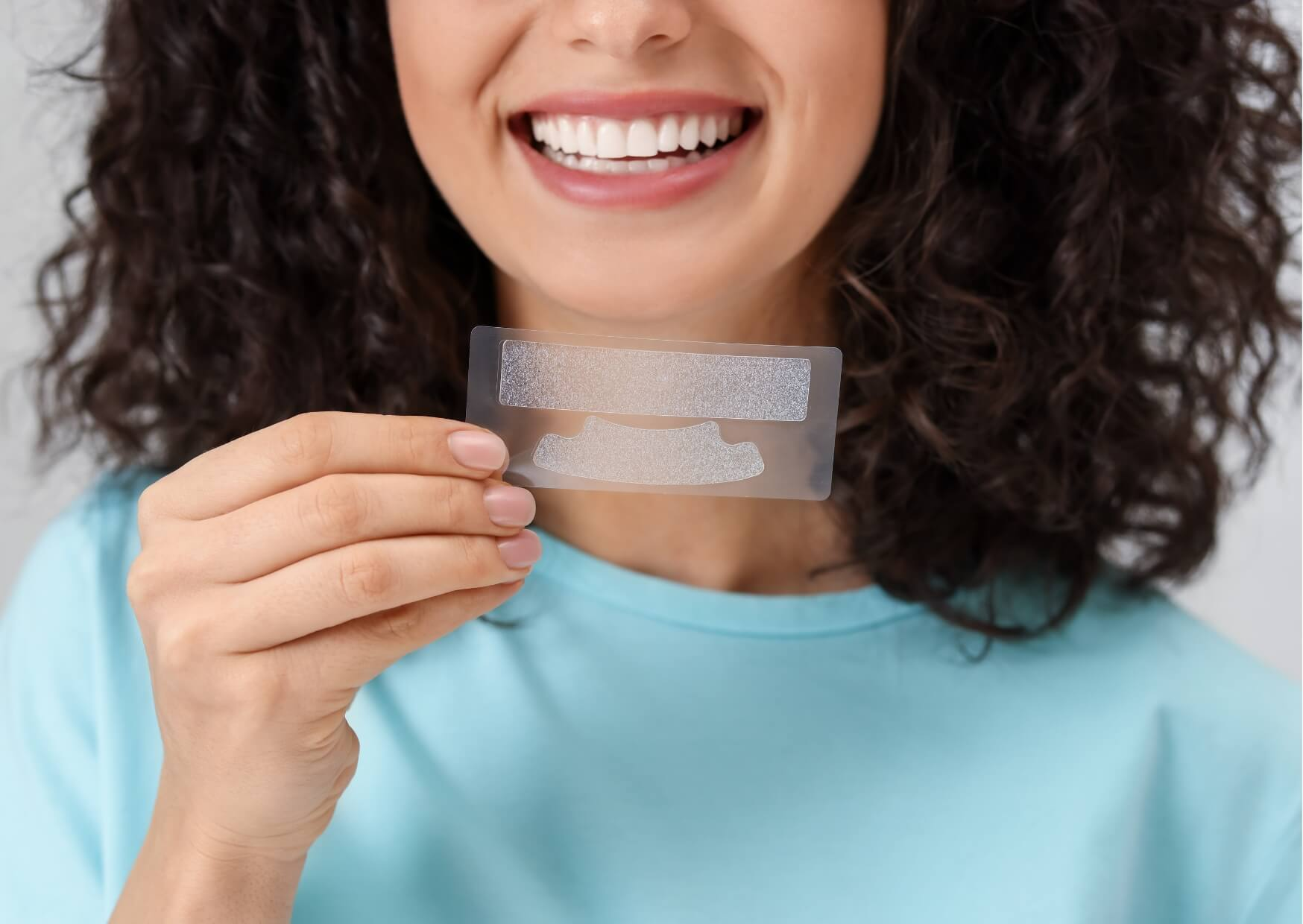
If your teeth look more coffee-forward than you would prefer, whitening strips may help. Teeth whitening strips can work for many people, especially when stains are on the outer enamel rather than deep inside the tooth.
Most strips use a peroxide-based whitening ingredient. Peroxide helps break apart stain molecules, which can make teeth look lighter over time.
Still, whitening strips do not work the same way for everyone. Some discoloration responds well, some changes only a little, and some needs a dentist’s evaluation instead of another box from the store.
Q & A Dental Care offers professional at-home whitening in Macedonia, OH, if you prefer a dentist-supervised alternative to over-the-counter strips.
Whitening strips are thin, flexible pieces coated with a bleaching gel. They sit against the front surfaces of the teeth so the whitening ingredient can stay in contact with enamel long enough to fade stains.
They usually work best on surface stains from coffee, tea, tobacco, and similar pigments. They may also help with mild yellowing that develops naturally with age.
They are less effective for gray discoloration, deep internal staining, or color changes linked to trauma, certain medications, large fillings, crowns, or root canal treatment. In those cases, the color change may start below the enamel, where strips have limited reach.
A good candidate usually has healthy gums, no untreated cavities, and natural teeth with mild to moderate staining. If the main concern is general yellowing, strips often produce a visible improvement.
If the issue is patchy color, white spots, exposed root surfaces, or one tooth that looks darker than the rest, the answer gets less simple. Those patterns can point to enamel changes, gum recession, previous dental work, or nerve-related problems rather than ordinary staining.
Whitening strips also do not change the color of crowns or other restorations such as veneers, bonding, or fillings (see crowns or bridges). That can leave a mismatch if nearby natural teeth lighten while restorations stay the same shade.
For many patients, the result is noticeable but not dramatic. Think cleaner and brighter, not necessarily movie-screen white.
Mild staining may improve within days to a couple of weeks, depending on the product and how consistently it is used. Older or deeper stains may improve less, even with careful use.
Your starting shade also matters. Teeth that are naturally darker or more heavily stained may still look better after whitening, but not uniformly bright white.
If your expectations are high or the discoloration looks unusual, a dental evaluation is worth it first. It helps to confirm that the problem is actually staining before you start whitening.
The two side effects patients mention most are tooth sensitivity and gum irritation. Sensitivity may feel like a short, sharp pain with cold air, cold drinks, or sweet foods.
This happens because peroxide can temporarily make teeth more reactive to temperature and other triggers. Gum irritation can happen if the gel touches soft tissue instead of staying on the tooth surface.
People with worn enamel, untreated decay, cracked teeth, gum recession, or already sensitive teeth may notice stronger symptoms. If pain is significant, gets worse, or lingers, stop using the product and contact a dentist.
Some situations deserve an exam before any whitening attempt. One tooth turning dark, spontaneous pain, swelling, a bad taste, bleeding gums, visible cavities, or a chipped tooth can signal something more important than staining.
Persistent discoloration near the gumline may also reflect tartar buildup, root exposure, or decay rather than ordinary pigment. Whitening over untreated dental disease is not a good shortcut.
If you have a history of trauma, recent dental work, or color changes that appeared quickly, a dentist should evaluate the cause. Teeth can change color for reasons that have nothing to do with coffee and everything to do with the inside of the tooth.
It is easy to assume all whitening works the same way with different packaging. In reality, over-the-counter strips and dentist-supervised whitening are not the same.
For a deeper comparison, see our complete guide to teeth whitening. Professional whitening usually uses stronger materials, custom application methods, and a dental exam to reduce surprises.
Here is a practical comparison:
| Option | Best For | Main Advantages | Main Limits |
| Whitening strips | Mild to moderate staining on healthy natural teeth | Convenient, lower cost, easy to access | Less precise fit, more gum contact, limited effect on deeper stains |
| At-home whitening | Patients who want stronger but controlled whitening | Custom trays, dental supervision, better fit | Higher cost than strips |
| In-office whitening | Faster visible change, event-driven whitening, tougher stains | Stronger treatment, monitored by dental team | More expensive, sensitivity can still occur |
If you have crowns, veneers, uneven color, or significant sensitivity, a dentist can help you choose the safer and more predictable route. That may include whitening, but sometimes it means cosmetic dentistry instead. Learn more about what cosmetic dentistry entails.
Not every tooth has the same shape, angle, or surface texture. If the strip does not contact every area evenly, whitening can look patchy.
Teeth may also look temporarily chalky or uneven right after whitening because of dehydration. This often settles, but persistent uneven color may reflect enamel variation, white spot lesions, or old restorations.
If the front teeth have bonding or fillings, those areas will not bleach like natural enamel. That is one of the most common reasons people feel the product worked, but the smile still does not look even.
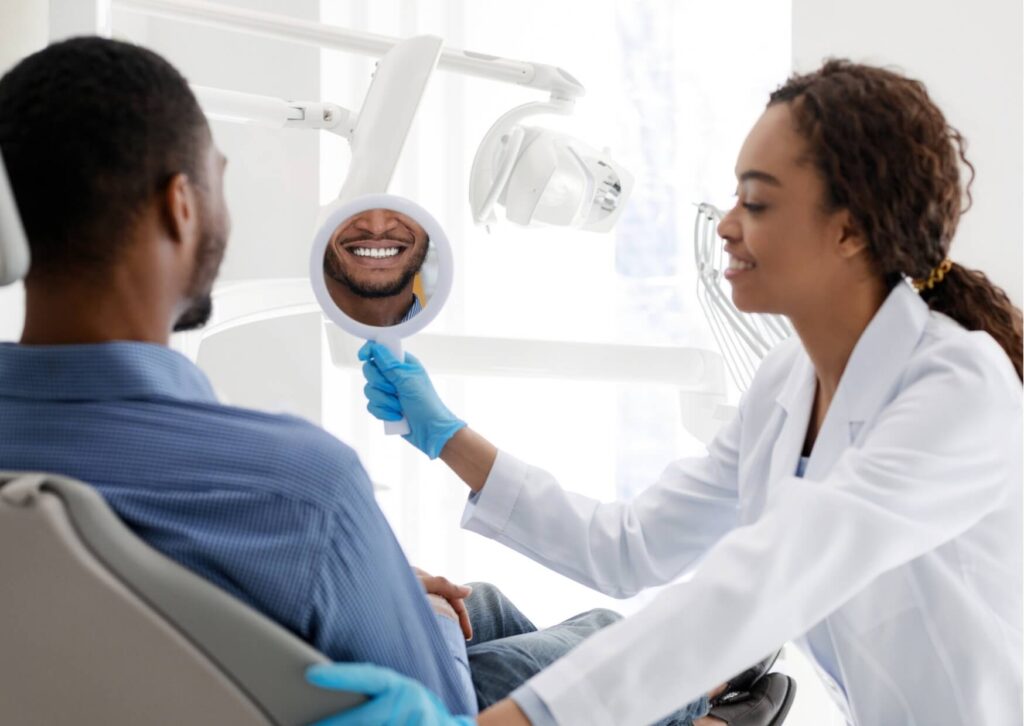
The safest approach is simple: know what is being whitened before trying to whiten it. A dental exam can identify cavities, gum recession, cracked enamel, exposed roots, and restorations that may affect both comfort and results, and regular dental cleanings help prevent surface stains.
This matters because whitening is cosmetic, but the mouth is still medical. If your teeth are healthy and the staining pattern fits, strips can be a reasonable low-commitment option.
If not, repeating the same over-the-counter experiment rarely improves the outcome. A dentist can explain whether the issue is stain, tooth structure, or something deeper, which can save time, money, and disappointment.
For many people, the answer to “do teeth whitening strips work?” is yes, within limits. The most useful takeaway is that teeth respond to chemistry and condition, not just optimism.
If you'd like dentist-supervised at-home whitening, Q & A Dental Care in Macedonia, OH (serving nearby Glenwillow and Mayfield Heights) can help. Call us at (330) 888-1299 to schedule.
They often do, especially when the yellowing is mild to moderate and affects natural enamel. They may work less well for deeper internal discoloration or teeth with existing restorations.
No. Whitening strips do not change the color of crowns, veneers, bonding, or fillings, so the shade may become uneven if nearby natural teeth lighten.
Results vary based on diet, smoking, oral hygiene, and the original type of staining. Coffee, tea, tobacco, and red wine can cause stains to return over time.
Used as directed, they are generally considered safe for many people. Still, they can trigger sensitivity or gum irritation, and they are not ideal when there is untreated decay, cracked teeth, or significant recession.
See a dentist if there is pain, swelling, one dark tooth, sudden color change, visible damage, persistent sensitivity, or uncertainty about why the teeth look discolored. Those signs may point to a problem that whitening will not fix.
| Monday | 9:00 AM – 7:00 PM |
| Tuesday | 9:00 AM – 2:00 PM |
| Wednesday | 9:00 AM – 7:00 PM |
| Thursday | 9:00 AM – 7:00 PM |
| Friday | 8:00 AM – 1:00 PM |
| Saturday | Closed |
| Sunday | Closed |