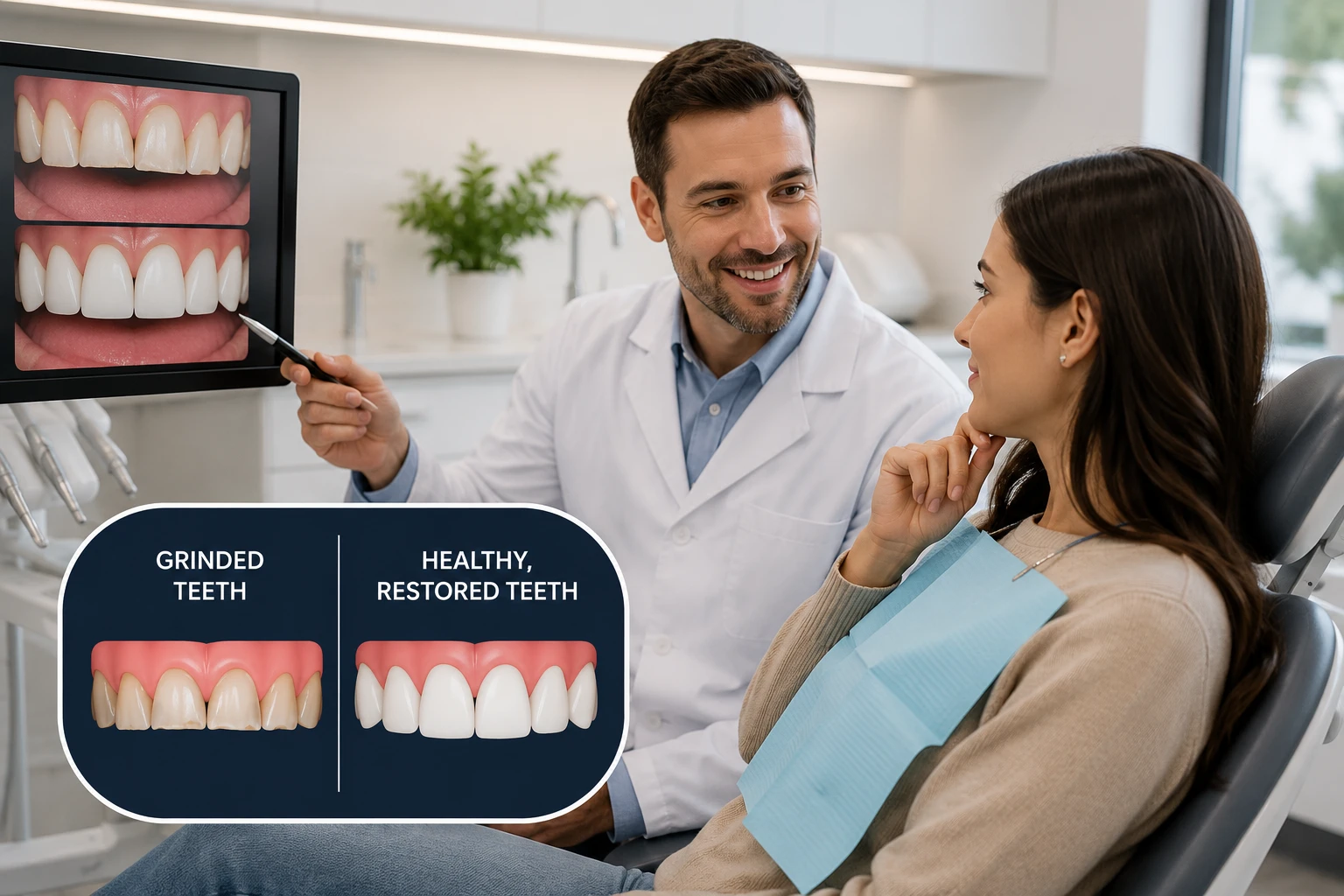
Grinded teeth may develop from chronic clenching, nighttime grinding, bite imbalance, or stress-related jaw tension. Tooth grinding, also called bruxism, may gradually wear enamel, flatten biting surfaces, increase sensitivity, and contribute to fractures or jaw discomfort. Q & A Dental Care provides preventive, restorative, and bite-focused treatment options that may help protect worn teeth and restore damaged tooth structure.
Patients experiencing enamel wear, jaw soreness, or cracked teeth often begin with general dentistry evaluations because earlier assessment may help reduce additional structural damage.
Teeth grinding commonly develops from repeated jaw clenching or involuntary grinding during sleep.
Common contributing factors may include:
Grinding pressure may place excessive force on enamel and restorations. For example, nighttime grinding may flatten tooth edges or weaken dental crowns over time.
According to the American Dental Association, chronic bruxism may contribute to tooth wear, jaw discomfort, headaches, and fractured teeth.
If grinding continues untreated, enamel loss may gradually increase tooth sensitivity and structural instability.
Grinded teeth often appear shorter, flatter, chipped, or uneven because repeated pressure gradually wears enamel surfaces.
Common signs may include:
For example, patients with long-term grinding may notice front teeth becoming thinner or more translucent as enamel slowly erodes.
Advanced grinding damage may eventually expose dentin, which may increase temperature sensitivity and chewing discomfort.
Grinded teeth may often be repaired through preventive, restorative, or cosmetic treatment depending on enamel loss and structural damage.
Treatment recommendations usually depend on:
Mild grinding damage may respond to preventive protection, while advanced structural wear may require rebuilding damaged teeth.
For example:
Patients with extensive grinding damage sometimes explore full-mouth rehabilitation because combined restorative treatment may help rebuild bite alignment and chewing function.
Dentists diagnose grinding damage through clinical examination, bite analysis, and digital imaging.
A grinding evaluation may include:
Digital imaging may help identify:
For example, patients with jaw soreness and tooth sensitivity may require imaging to determine whether grinding damage is affecting surrounding structures.
The National Institutes of Health notes that sleep bruxism may contribute to progressive tooth wear and jaw dysfunction when left unmanaged.
Nightguards may help reduce direct tooth-on-tooth grinding during sleep.
Custom nightguards are typically designed to:
Nightguards may be recommended for patients with:
Patients with jaw tension or bite-related discomfort sometimes explore TMJ treatment because untreated grinding pressure may affect surrounding jaw joints and muscles.
Without bite protection, cosmetic or restorative work may experience additional wear or fractures over time.
Stress-related muscle tension and disrupted sleep patterns may increase nighttime grinding intensity in some patients.
Conditions commonly associated with worsening bruxism may include:
For example, patients experiencing frequent nighttime waking or elevated stress levels may unknowingly clench their jaw for extended periods during sleep.
Patients with airway-related sleep disruption sometimes explore sleep apnea treatment because interrupted breathing patterns may contribute to nighttime grinding or jaw tension in certain cases.
If stress-related grinding continues for long periods, jaw muscles may become fatigued and contribute to morning headaches, facial soreness, or increased tooth sensitivity.
Restorative dentistry may help rebuild teeth affected by grinding-related wear.
Common restorative treatments may include:
Bonding may help repair:
Crowns may help protect:
Patients with significant structural wear sometimes explore crowns and bridges because full-coverage restorations may help strengthen weakened teeth while restoring bite function.
If grinding damage affects multiple teeth, phased restorative planning may be recommended to improve bite stability gradually.
Cosmetic dentistry may help improve the appearance of teeth affected by mild to moderate grinding wear.
Cosmetic treatment options may include:
Patients with visible front-tooth wear sometimes explore veneers because porcelain restorations may help improve tooth shape, symmetry, and surface appearance after enamel damage develops.
Cosmetic treatment is typically most successful when active grinding pressure is stabilized first.
Without bite protection, newly restored surfaces may experience additional wear or fracture risk over time.
Orthodontic treatment may help improve bite alignment when grinding is associated with uneven tooth contact or malocclusion.
Orthodontic correction may help reduce:
Treatment options may include:
Patients with uneven bite pressure sometimes explore Invisalign because improving tooth alignment may help distribute chewing forces more evenly.
For example, patients with crowded teeth may experience concentrated grinding pressure on specific teeth, increasing the risk of fractures or enamel wear.
Chronic grinding pressure may shorten the lifespan of certain dental restorations if excessive bite force remains uncontrolled.
Grinding may affect:
For example, repeated nighttime clenching may place concentrated force on back teeth, increasing the risk of fractured fillings or loosened crowns.
Patients with damaged restorations sometimes require tooth-colored fillings when grinding-related pressure contributes to cracking or wear.
Protective bite stabilization may help reduce excessive force on both natural teeth and existing restorations.
Untreated grinding damage may gradually increase structural and functional complications.
Long-term grinding may contribute to:
For example, repeated grinding pressure may weaken fillings, crowns, or veneers if bite forces remain uncontrolled.
Severe enamel wear may eventually affect chewing efficiency and increase restorative complexity.
Early evaluation may help determine whether preventive protection, restorative treatment, or bite stabilization is appropriate before additional damage develops.
Early intervention may help reduce long-term structural damage caused by chronic grinding.
Preventive treatment may help reduce the risk of:
For example, mild grinding identified during routine dental exams may sometimes be managed with nightguards and bite monitoring before crowns or rehabilitation become necessary.
Patients receiving ongoing preventative dentistry evaluations may identify early enamel wear before structural damage becomes more advanced.
If grinding symptoms worsen over time, dentists may recommend phased treatment focused on bite protection, restorative repair, and long-term stability.
Natural enamel does not regenerate after significant wear occurs. Restorative treatment may help rebuild damaged tooth structure depending on severity.
Stress is one contributing factor, but grinding may also relate to bite imbalance, sleep bruxism, TMJ dysfunction, or airway-related conditions.
Chronic grinding may place excessive pressure on restorations and may contribute to fractures, loosening, or accelerated wear.
Nightguards may help prevent additional damage, but existing fractures or severe enamel wear may still require restorative treatment.
Chronic clenching and grinding may strain jaw muscles and joints, which may contribute to soreness, headaches, or TMJ discomfort.
Severe grinding damage may require crowns, bonding, orthodontics, veneers, or full-mouth rehabilitation depending on structural wear severity.
Grinding-related enamel wear may gradually affect tooth strength, comfort, and long-term oral function. Earlier evaluation may help determine whether preventive protection, restorative care, or bite correction is appropriate before additional wear develops.
If you are noticing flattened teeth, jaw soreness, tooth sensitivity, chipped edges, or cracked restorations, a dental evaluation may help identify whether grinding is contributing to your symptoms. Q & A Dental Care can evaluate signs of teeth grinding and explain whether nightguards, restorative treatment, bite correction, or TMJ-focused care may help protect your teeth and improve bite stability. Patients concerned about grinding-related damage can request a consultation to discuss personalized treatment options.
| Monday | 9:00 AM – 7:00 PM |
| Tuesday | 9:00 AM – 2:00 PM |
| Wednesday | 9:00 AM – 7:00 PM |
| Thursday | 9:00 AM – 7:00 PM |
| Friday | 8:00 AM – 1:00 PM |
| Saturday | Closed |
| Sunday | Closed |