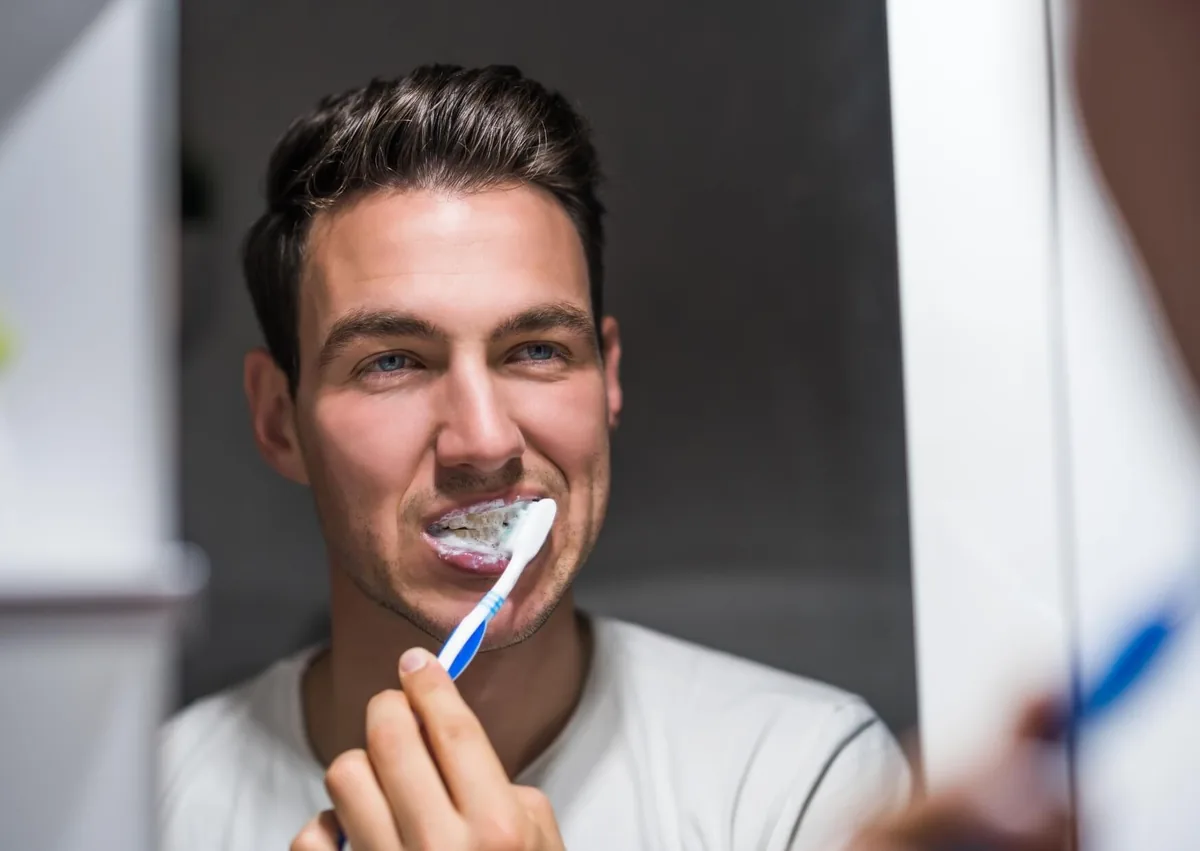
To remove plaque from teeth, brush twice a day with fluoride toothpaste, clean between your teeth once a day, and keep up with regular dental checkups. Soft plaque can usually be removed at home, but hardened plaque, called tartar or calculus, needs professional dental instruments and routine cleanings through preventative dentistry.
If you're concerned about persistent plaque or hardened tartar that brushing can't remove, preventative dentistry can determine whether a professional cleaning or follow-up care is needed. Q & A Dental Care in Macedonia, OH provides targeted cleanings and routine exams to protect your teeth and gums and help you maintain simpler at-home care.
Plaque is a sticky film of bacteria that forms on teeth and along the gumline every day. When these bacteria feed on sugars and starches, they produce acids that can raise the risk of cavities and gum inflammation.
Brush for two minutes twice a day with a soft-bristled toothbrush, whether manual or electric. Angle the bristles slightly toward the gumline and use short, gentle strokes on the front, back, and chewing surfaces of each tooth.
Use fluoride toothpaste and spit out the excess after brushing. Avoid hard scrubbing, because it does not remove plaque better and may irritate the gums or wear down tooth surfaces over time.
A toothbrush cannot fully clean the tight spaces between teeth. Clean between your teeth once a day with floss, interdental brushes, a water flosser, or another device recommended by your dentist.
If you use floss, guide it gently between the teeth and curve it into a C shape against one tooth. Move it up and down along the side of the tooth, then repeat on the neighboring tooth without snapping the floss into the gums.
The best tool depends on the size of the spaces, your hand dexterity, and whether you have braces, bridges, or implants. Interdental brushes often work well for larger spaces, while floss may fit better in tight contacts.
|
Cleaning Tool |
Often Useful For |
Key Limitation |
|---|---|---|
|
String floss |
Tight contacts between teeth |
Can be difficult with limited dexterity |
|
Interdental brush |
Wider spaces, braces, or some dental work |
Must be sized correctly |
|
Water flosser |
Braces, bridges, implants, or dexterity concerns |
Technique and consistent use matter |
Plaque is usually soft, pale, and sticky. If it stays on the teeth, minerals in saliva can harden it into tartar, often near the gumline or behind the lower front teeth.
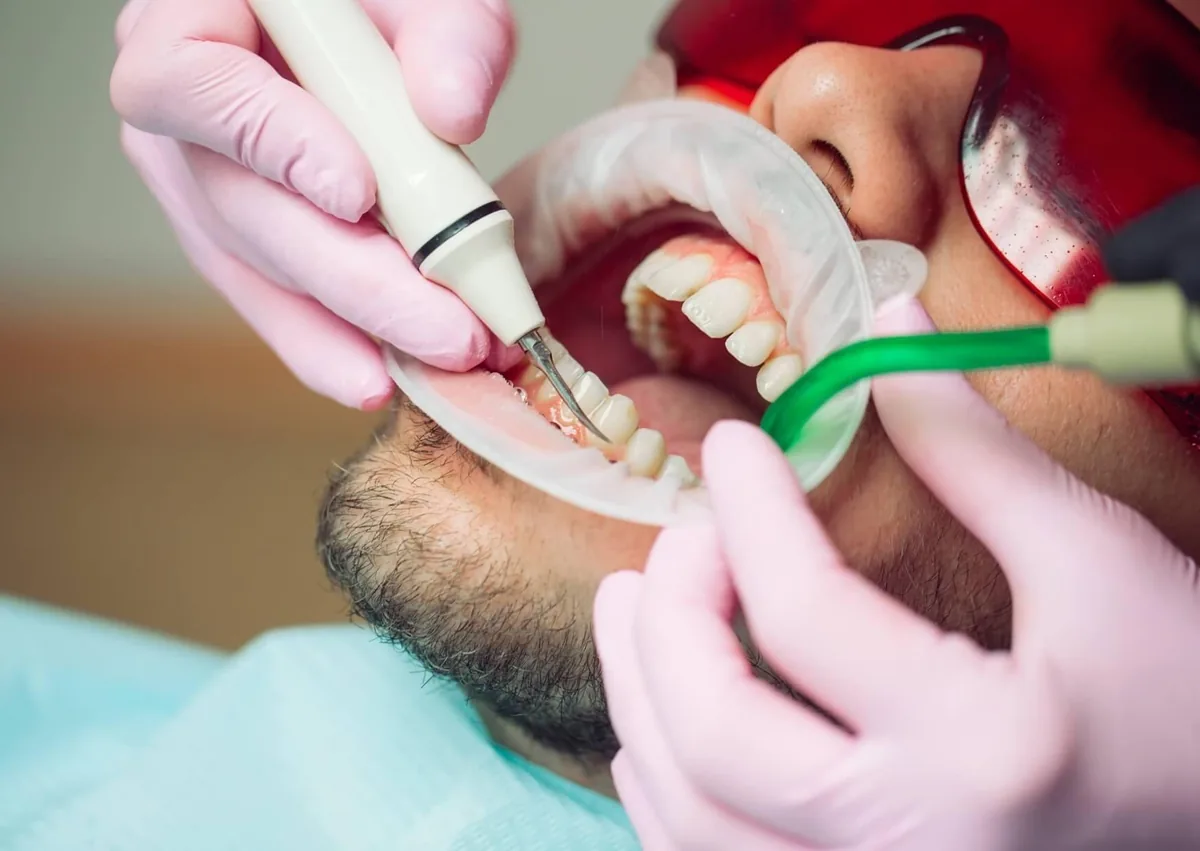
Once tartar forms, brushing and flossing will not remove it. A professional cleaning is needed to break it up safely without harming the teeth or gums.
|
Buildup |
Typical Features |
Removal Method |
|---|---|---|
|
Plaque |
Soft, sticky film that reforms daily |
Brushing and cleaning between teeth |
|
Tartar |
Hard, rough deposit that may look yellow or brown |
Professional dental cleaning |
Do not try to scrape tartar off with sharp tools, fingernails, or home dental kits. These methods can injure the gums, scratch tooth surfaces, damage dental work, or push buildup farther below the gumline.
Plaque starts forming again soon after you clean your teeth. That is why steady daily care works better than occasional aggressive cleaning.
Replace your toothbrush or electric brush head about every three to four months, or sooner if the bristles are frayed. Worn bristles clean less effectively and may make it harder to remove plaque along the gumline.
Plaque-disclosing tablets or solutions can help show where plaque is being missed. Follow the product directions, and ask a dentist or hygienist if they are a good fit for children or for people with extensive dental work.
Limit frequent sipping and snacking on sugary or starchy foods, especially between meals. Fewer exposures give plaque bacteria less fuel to produce acid.
Drinking water after meals may help rinse away food particles. Chewing sugar-free gum can also support saliva flow, but it does not replace brushing or cleaning between the teeth.
The goal is not to stop plaque from forming completely, because that is not realistic. The goal is to remove it regularly before it hardens into tartar or starts to irritate the gums.
Schedule a dental evaluation if buildup feels hard, your gums bleed often, bad breath does not improve, or your gums look swollen or seem to be pulling away from the teeth. These signs can happen with gingivitis or periodontitis, a more advanced form of gum disease that may damage the tissues and bone supporting the teeth and may require periodontics.
For more on causes and treatment options, see our guide on how to prevent gum disease.
Seek prompt care for worsening tooth pain, facial or gum swelling, pus, fever, a loose permanent tooth, or trouble opening the mouth. Trouble breathing or swallowing with oral or facial swelling requires emergency care.
A dentist or dental hygienist can tell the difference between removable plaque and tartar, check for cavities and gum disease, and recommend an appropriate cleaning schedule through general dentistry. A professional evaluation is also important when symptoms continue despite careful home care or when the cause is unclear.
If tartar, bleeding gums, or persistent bad breath are present, the appropriate next step is a dental exam and professional cleaning to address the cause. Contact Q & A Dental Care for preventative dentistry in Macedonia, OH and nearby Twinsburg, OH to schedule an exam; call (330) 888-1299 to make an appointment.
A thorough brushing can remove much of the soft plaque you can reach. It may not fully clean between the teeth or near the gumline, and plaque begins forming again quickly.
Some antimicrobial mouthwashes may help reduce plaque and gingivitis when used as directed. They do not replace brushing and between-teeth cleaning, which are the main ways to physically disrupt plaque.
Toothpaste made with baking soda may help remove some surface plaque and stains. Using household baking soda or abrasive mixtures directly on the teeth is not a substitute for fluoride toothpaste and may irritate oral tissues if used the wrong way.
Bleeding can happen when plaque has irritated and inflamed the gums, especially if between-teeth cleaning has not been consistent. Gentle daily cleaning may help mild inflammation, but persistent, heavy, painful, or unexplained bleeding should be checked by a dental professional.
| Monday | 9:00 AM – 7:00 PM |
| Tuesday | 9:00 AM – 2:00 PM |
| Wednesday | 9:00 AM – 7:00 PM |
| Thursday | 9:00 AM – 7:00 PM |
| Friday | 8:00 AM – 1:00 PM |
| Saturday | Closed |
| Sunday | Closed |