When comparing dentures vs. dental implants, the best choice depends on your oral health, jawbone support, budget, treatment timeline, and personal goals. Implants usually provide more stability and help preserve the jawbone, while dentures are removable, usually cost less upfront, and do not require implant surgery.
Neither option is right for everyone. A dentist should evaluate your gums, remaining teeth, jawbone, medical history, and ability to care for the restoration before recommending treatment.
If you want to compare removable teeth with a more secure long-term option, dental implants may offer stronger chewing support and better jawbone preservation. Q & A Dental Care in Macedonia, OH helps patients restore function and confidence with treatment plans built around comfort, health, and long-term stability.
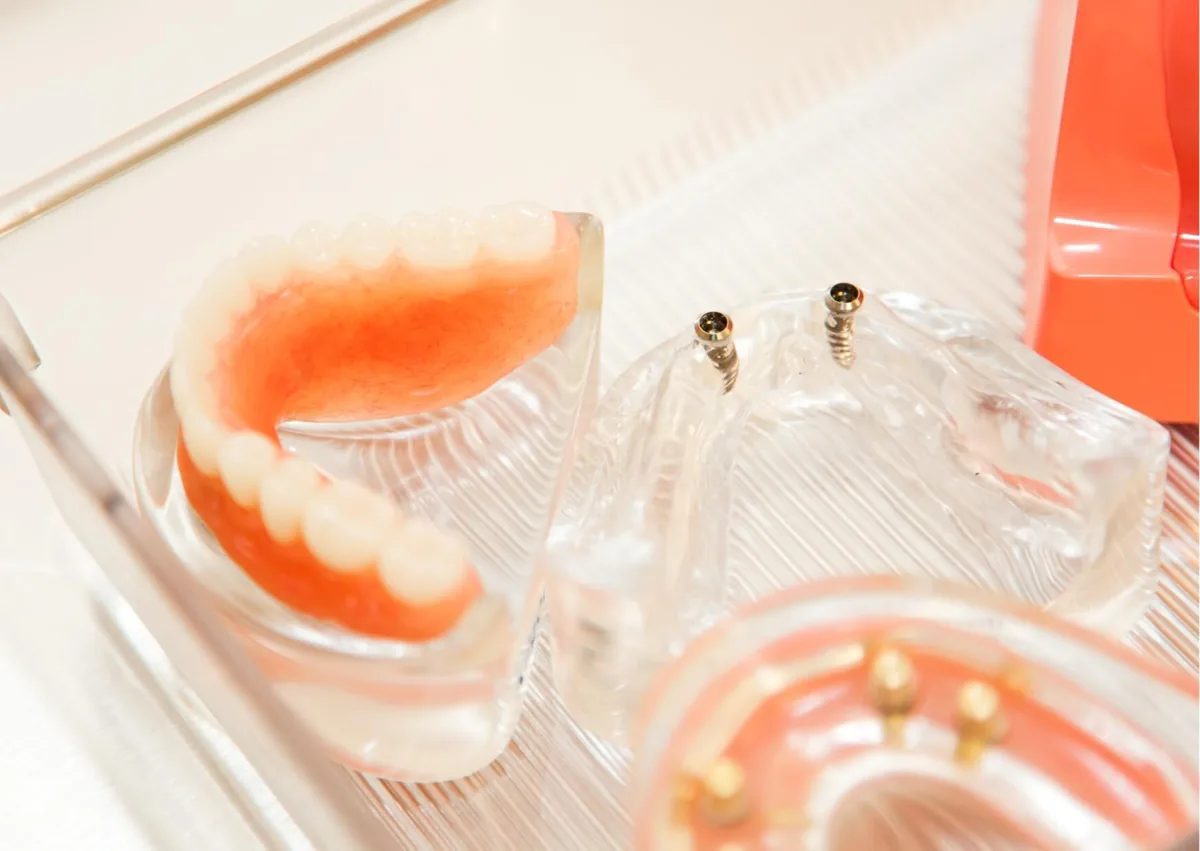
Dentures are removable appliances that replace several missing teeth or a full arch. Full dentures rest on the gums, while partial dentures connect around remaining natural teeth; learn more about full and partial dentures.
Dental implants are small posts placed in the jawbone to support replacement teeth. One implant may hold a crown, several may support a bridge, and multiple implants may stabilize a removable or fixed full-arch restoration, similar to some dental bridges and dentures options.
The main difference is how they are supported. Dentures rely mostly on the gums and underlying ridge, while implants anchor to the jawbone through the healing osseointegration process.
Dentures can replace many missing teeth without implant surgery and are often the faster, lower-cost starting option. For broader context on tooth loss and patient experience, see how dentures can help.
They may be a practical choice when bone volume, health conditions, cost, or personal preference make implants less suitable. Dentures can also be useful when someone wants a non-surgical solution.
Because dentures sit on soft tissue, they can shift during eating or speaking, especially as the jaw ridge changes over time. Lower dentures often feel less secure than upper dentures, and some people use adhesive for extra confidence, although adhesive cannot fix a poor fit.
An adjustment period is normal. Mild soreness, extra saliva, and temporary speech changes can happen at first, but ongoing pain, ulcers, or looseness should be checked by a dentist.
Implants usually feel more secure because chewing forces are directed into the jawbone; you can learn more about dental implants. They can improve chewing stability, reduce pressure on the gums, and help slow bone loss where implants are placed.
Implant treatment does require surgery and enough healthy bone for support. Some patients need bone grafts, and healing may take several months before the final teeth are placed.
Implants also need ongoing care. Poor plaque control, tobacco use, uncontrolled diabetes, teeth grinding, and a history of gum disease can increase implant failure risk, although individual risk varies.
Dentures usually cost less upfront, but they may need relining, adjustment, repair, or replacement as your mouth changes. Insurance coverage varies, so it helps to ask for a written estimate that includes follow-up care and likely maintenance.
Implants usually cost more at the start and may involve separate fees for imaging, surgery, grafting, temporary teeth, and the final restoration. With good care, implants can last many years, and published implant survival rates are generally high, although the attached crown, bridge, or denture may still wear out over time.
Comfort depends on fit, bite, saliva, gum health, and how well you adapt. Implant-supported teeth are often more stable for chewing, but even well-made replacements may not feel exactly like natural teeth.
Traditional dentures may be made after extraction sites heal, or immediate dentures may be placed the same day teeth are removed. Immediate dentures often need adjustments or relining because the gums and bone change during healing.
Implant treatment starts with an exam and imaging to evaluate bone, nerves, sinuses, and nearby teeth. Temporary teeth may be possible in some cases, but immediate function is not safe or predictable for every patient.
Tenderness and swelling can happen after extractions or implant placement. Follow your dentist's instructions closely, and report pain or swelling that is severe, getting worse, or not improving as expected.
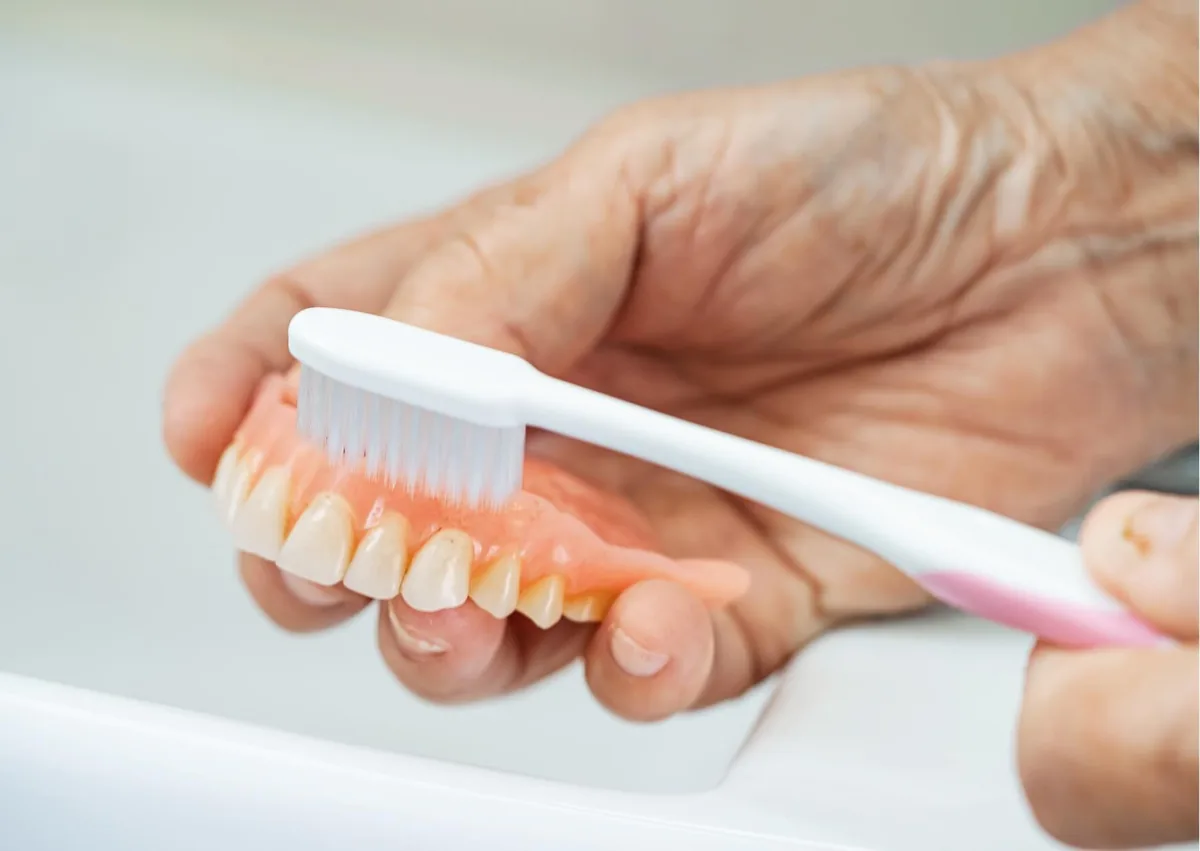
Conventional dentures should be removed and cleaned daily with a denture brush and a cleaner made for dentures. Clean your gums, tongue, and any remaining teeth as directed, and avoid hot water because it can warp the appliance.
Implants need daily plaque removal around the gumline and under any bridge or full-arch restoration. Your dental team may recommend floss threaders, interdental brushes, special brushes, or water-flossing tools based on the design.
Regular dental visits matter with either option. These visits help check fit, bite, gum health, bone support, remaining teeth, and signs of wear.
Schedule an evaluation if missing teeth make it hard to eat or speak, or if a denture slips, clicks, causes sores, or no longer fits well. You should also seek care for bleeding around an implant, a persistent bad taste, pus, gum recession, or a restoration that feels loose.
Get urgent dental or medical care for rapidly increasing facial swelling, fever with dental swelling, uncontrolled bleeding, trouble breathing or swallowing, or severe pain after a procedure. A prompt exam can identify whether you need an adjustment, repair, infection treatment, or another solution.
The best choice usually comes from a full exam rather than cost or appearance alone. Talking through expected function, maintenance, healing time, risks, and long-term expense can help you choose with realistic expectations.
The best next step is a focused exam to confirm candidacy for dental implants and discuss alternatives like full and partial dentures or bone grafts if needed. Call Q & A Dental Care in Macedonia, OH, serving Glenwillow and Mayfield Heights, at (330) 888-1299 or book online to schedule your consultation.
No. Implants often provide better stability and bone support, but dentures may be safer or more practical for some people because of health, anatomy, treatment time, cost, or personal preference.
Yes. implant-supported dentures connect to implants for greater retention and may be removable by the patient or fixed in place for removal only by a dental professional, depending on the design.
Possibly. Imaging may show that implants of a certain size or position are feasible, while some patients may need bone grafts or a different restoration. Severe bone loss can limit treatment choices.
Both can be designed to resemble natural teeth and gums. The result depends on tooth position, shade, lip support, available space, gum appearance, and the quality of planning and fabrication.
There is no guaranteed lifespan. Dentures often need adjustment or replacement as the mouth changes, while implants may function for many years if the surrounding tissue stays healthy, although attached crowns or dentures can still wear or break.
| Monday | 9:00 AM – 7:00 PM |
| Tuesday | 9:00 AM – 2:00 PM |
| Wednesday | 9:00 AM – 7:00 PM |
| Thursday | 9:00 AM – 7:00 PM |
| Friday | 8:00 AM – 1:00 PM |
| Saturday | Closed |
| Sunday | Closed |