If you are wondering how long a tooth implant takes, the short answer is that most people need about three to nine months from implant placement to the final crown. In more complex cases, the full process can be shorter or can extend to a year or longer, especially if extraction, grafting, or slower healing is involved.
The implant surgery itself is usually much shorter than the full treatment timeline. For one tooth, placement often takes about one to two hours, while most of the overall wait is for the jawbone and gums to heal safely.
A tooth implant timeline depends on whether a tooth still needs to be removed, whether bone grafts are needed, how well the bone heals, and where the implant is placed. Learn more about options with dental bridges and dentures.
A missing tooth can make eating, speaking, and smiling feel less comfortable, and dental implants can be a long-term way to restore function and appearance. At Q & A Dental Care in Macedonia, OH, patients get clear guidance on timing, healing, and whether their mouth needs extra preparation before treatment.
Treatment usually starts with an exam, X-rays, and often a 3D scan. This helps the dentist evaluate bone volume, gum health, bite forces, and the location of nearby nerves or sinuses.
The dentist also reviews medical conditions, medications, tobacco use, and any history of gum disease. These details help estimate healing time and determine whether implant placement can happen right away or needs to be staged.
If a damaged tooth is still present, it may need to be removed first. In some cases, a tooth extraction and implant can happen at the same visit, but infection, bone loss, or the shape of the socket may require a delay; learn more about the tooth extraction process.
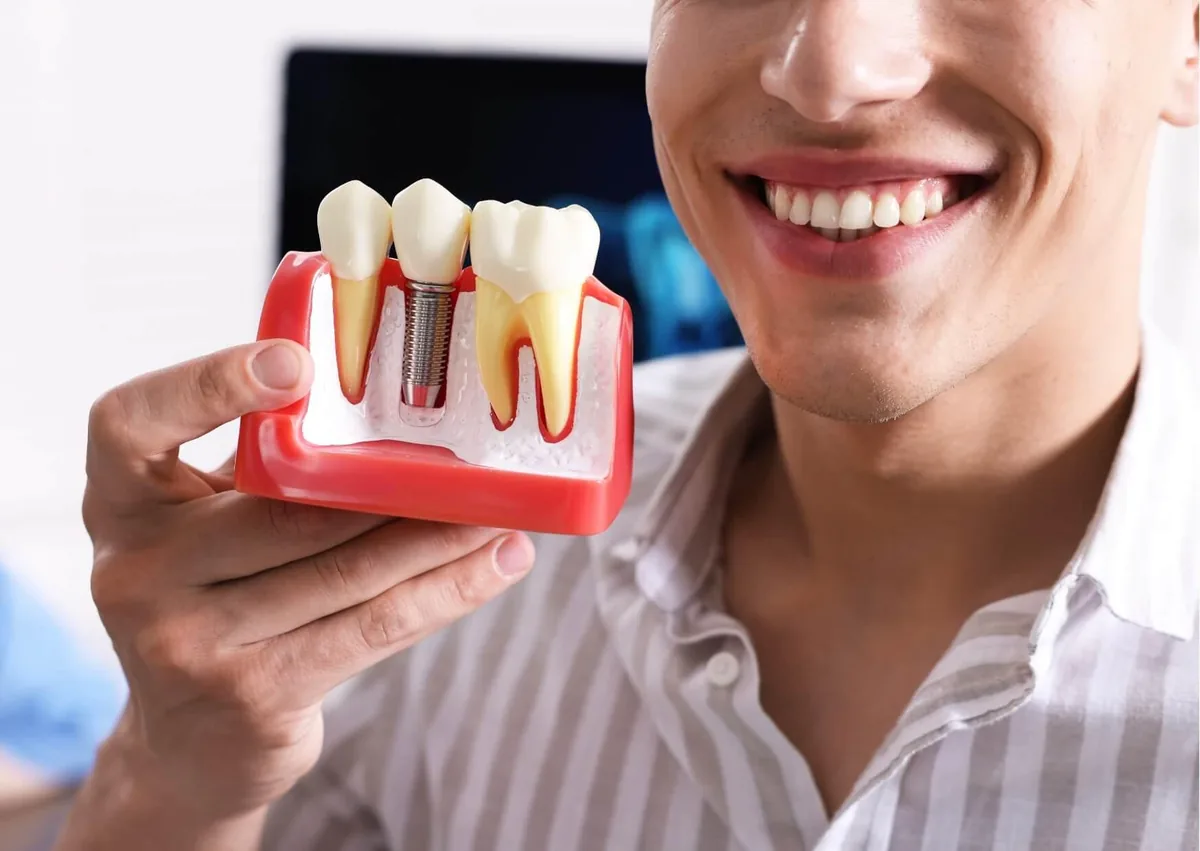
During implant surgery, a titanium or ceramic post is placed into the jawbone. The bone then bonds to the implant through osseointegration, which often takes about three to six months.
Once the implant is stable, the dentist places an abutment, which connects the implant to the replacement tooth. Impressions or digital scans are then used to make the final crown, which may take a few more weeks.
One common reason for a longer timeline is not having enough bone to support the implant securely. In that situation, a bone grafts procedure may be recommended before or during treatment, and you can read more about bone grafting.
A small graft done with implant placement may add little time. A larger graft may need several months of healing before the implant can be placed.
Implants in the upper back jaw sometimes need a sinus lift. Depending on the amount of available bone, the sinus lift and implant may be done together or in separate stages.
Other factors can also slow healing. Active gum disease, uncontrolled diabetes, tobacco or nicotine use, teeth grinding, and some medical treatments can interfere with healing or increase the risk of complications.
Healing speed also varies from person to person. Even if the area feels fine, the dentist still needs to confirm the implant is stable before placing the final crown.
Sometimes, but not in the way many people expect. “Same-day implants” usually means the implant post and a temporary tooth are placed in one visit, not that healing is complete or that the final crown is permanently finished that day.
Immediate placement may be possible when there is enough healthy bone, no uncontrolled infection, and strong initial implant stability. The temporary tooth is often adjusted to reduce chewing pressure while the implant heals.
Some patients instead wear a removable temporary tooth or a temporary bridge. The safest option depends on the implant location, appearance needs, bite pressure, and the condition of the surrounding tissues.
After surgery, mild swelling, soreness, bruising, and slight bleeding are common for the first few days. Most symptoms should gradually improve rather than get worse.
Many people return to normal daily activities within a few days, depending on how extensive the procedure was. Recovery may take longer if extractions, grafting, or multiple implants were done at the same time.
Follow the dental team's instructions for cleaning, eating, and activity. Avoiding tobacco, keeping follow-up visits, and maintaining good plaque control can help protect the gums and support healing.
It is important not to judge healing by comfort alone. An implant may feel normal before it is fully integrated, so chewing too hard too soon can put the result at risk.
Call the treating dental office if pain or swelling worsens after first improving, bleeding continues, or you notice fever, pus, or a bad taste that does not go away. A loose implant or temporary tooth should also be checked promptly.
New numbness, tingling, or altered sensation should be reported right away. These symptoms are not typical parts of routine healing.
Seek urgent medical or dental care for rapidly spreading swelling, trouble breathing or swallowing, uncontrolled bleeding, or signs of a severe allergic reaction. Those symptoms need immediate attention.

A dentist can give you the most accurate timeline after evaluating the tooth, bone, gums, bite, and overall health. Asking whether you may need extraction, grafting, or a temporary tooth can help you know what to expect from the start.
A consultation provides a clear timeline for your implant, including whether tooth extraction or bone grafts are needed and how long healing will take. Contact Q & A Dental Care for dental implants in Macedonia, OH, serving Glenwillow and Mayfield Heights; call (330) 888-1299 to schedule an appointment.
A single uncomplicated implant often takes about one to two hours to place. If multiple implants, extractions, or grafting are involved, the appointment may take longer.
In selected cases, an implant can be placed immediately after extraction. In other cases, the site may need to heal for several weeks to several months, especially if infection, bone damage, or grafting is involved.
Many implants heal for about three to six months before the final crown is placed. The dentist may also use exam findings and implant stability measurements, not just time alone, to decide when it is ready.
Not always. A temporary removable tooth, temporary bridge, or provisional crown may be an option, depending on the site and whether pressure needs to be kept off the implant.
A longer timeline may happen when treatment includes complex extractions, major bone grafts, sinus procedures, infection control, or slower healing. In those cases, extra time helps create a more stable foundation instead of rushing the final tooth.
| Monday | 9:00 AM – 7:00 PM |
| Tuesday | 9:00 AM – 2:00 PM |
| Wednesday | 9:00 AM – 7:00 PM |
| Thursday | 9:00 AM – 7:00 PM |
| Friday | 8:00 AM – 1:00 PM |
| Saturday | Closed |
| Sunday | Closed |