A smile often speaks before words ever do. It communicates warmth, confidence, and approachability in a single moment. Cosmetic dentistry exists to refine that message, not to change who you are—but to enhance what’s already there.
At trusted practices such as Q & A Dental Care, dental experts quietly guide patients through these choices every day, helping them align their smile goals with treatments that make sense both aesthetically and practically.
Both porcelain veneers and composite bonding promise a brighter, more confident smile, yet they differ in permanence, cost, and aesthetic impact. Understanding those differences is the key to making a decision you won’t second-guess later.
Cosmetic dentistry can address a wide range of concerns, including persistent discoloration, small chips or cracks, uneven edges, visible gaps, and minor alignment issues.
These imperfections often seem small individually, yet together they can impact how comfortable someone feels when smiling or speaking.
Porcelain veneers function like custom-crafted armor for your teeth—strong, polished, and built to last.
Composite bonding, by contrast, works more like artistic sculpting, reshaping and refining tooth surfaces directly. Both approaches enhance appearance, but they do so in distinctly different ways.
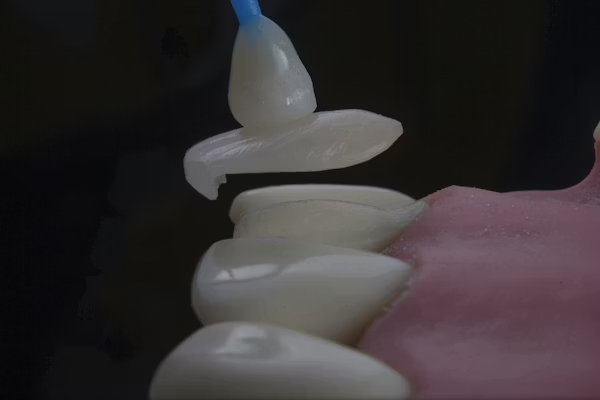
Porcelain veneers are ultra-thin ceramic shells designed to cover the front surface of teeth. Despite their delicate appearance, they are remarkably durable and capable of transforming color, shape, and symmetry with precision.
The treatment and application process involves careful planning, minimal enamel reshaping, and secure bonding. Once placed, veneers blend seamlessly with surrounding teeth, creating a natural yet refined appearance that holds up under daily use.
Patients often choose veneers to correct severe discoloration, address multiple cosmetic flaws at once, or invest in a long-term smile solution that requires minimal maintenance over time.
Composite bonding uses a malleable, tooth-colored resin that adheres directly to the enamel. The dentist sculpts the material to the desired shape, matching it closely to the surrounding teeth.
Bonding allows dentists to fill small gaps, smooth rough edges, or repair chips with precision. Once shaped, the resin is hardened using a curing light and polished to a smooth finish.
Bonding is commonly used for minor cosmetic improvements where speed, affordability, and minimal tooth alteration are priorities.
| Feature | Porcelain Veneers | Composite Bonding |
| Material | High-grade ceramic | Composite resin |
| Treatment Time | Multiple visits | One visit |
| Durability | 10–20 years | 3–7 years |
| Stain Resistance | Excellent | Moderate |
Porcelain closely mimics the translucency of natural enamel, while composite resin provides flexibility and ease of repair.
Veneers require laboratory fabrication and precise placement, while bonding is performed directly in the dental chair.
Veneers are engineered for long-term wear, whereas bonding may require touch-ups or replacement over time.
Porcelain veneers maintain their color exceptionally well, even with exposure to coffee, wine, or smoking. Bonding, while attractive initially, is more susceptible to discoloration.
Porcelain reflects light similarly to natural enamel, giving veneers a lifelike appearance that remains consistent for years.
Veneers allow complete smile customization, while bonding focuses on localized improvements.
With proper care, veneers can last well over a decade, often approaching 20 years.
Bonding typically lasts several years and may require repairs or replacement as it wears.
Grinding, oral hygiene habits, and professional placement all influence how long results last.
At Q & A Dental Care, veneer treatment begins with detailed planning to ensure balance, symmetry, and natural aesthetics.
Minimal enamel reshaping allows veneers to fit comfortably without bulk.
Temporary veneers protect teeth while custom restorations are crafted, followed by precise final placement.
Bonding often preserves natural tooth structure entirely.
Most bonding treatments are completed in a single visit.
Attention to detail during shaping and polishing determines how natural the final result appears.
Veneers typically require multiple appointments for optimal results.
Bonding is ideal when time is limited.
Urgency often favors bonding, while longevity favors veneers.
Porcelain veneers typically involve a higher upfront investment. This cost reflects the use of premium ceramic materials, detailed smile design, laboratory fabrication, and multiple appointments.
Although the initial expense may seem significant, many patients view veneers as a long-term investment due to their durability and minimal need for replacement.
Composite bonding is generally more affordable at the outset. Because it is completed in a single visit and does not require laboratory work, the overall cost is lower.
This makes bonding an attractive option for patients seeking cosmetic improvements without a substantial financial commitment.
When evaluating cost, it is important to look beyond the initial price. Veneers often provide better long-term value because they last significantly longer and resist staining.
Bonding, while less expensive initially, may require periodic repairs or replacement, which can increase cumulative costs over time.
No cosmetic dental treatment lasts forever, so understanding repair options is important.
One advantage of composite bonding is its ease of repair. Chips or wear can often be corrected quickly during a routine visit without replacing the entire restoration.
While porcelain veneers are durable, damage may require replacement rather than repair. Proper care significantly reduces this risk, but replacement is sometimes necessary after many years of use.
Both veneers and bonding require ongoing dental care. Regular dental checkups at Q & A Dental Care help ensure that restorations remain secure, functional, and visually appealing.
Patient comfort during and after treatment is an important consideration.
Some patients experience temporary sensitivity following veneer placement due to enamel preparation. This sensitivity usually subsides within a short period as the teeth adjust.
Composite bonding is typically very comfortable, with little to no sensitivity reported. Most patients return to normal activities immediately after treatment.
Using desensitizing toothpaste and following post-treatment instructions can help manage any temporary discomfort associated with either option.
Veneers are an excellent solution for deep stains that do not respond to whitening treatments.
Patients with several aesthetic concerns—such as uneven shape, discoloration, and minor alignment issues—often benefit from veneers’ transformative potential.
Those looking for a durable, low-maintenance solution frequently choose veneers for their longevity and stability.
Bonding is ideal for correcting small imperfections that do not require extensive alteration.
Patients seeking aesthetic improvements at a lower cost often prefer bonding.
Bonding works well for individuals who want the option to adjust or upgrade their treatment in the future.
Veneers often excel in the smile zone because they provide uniform color, shape, and translucency.
Achieving symmetry is easier with veneers, particularly when multiple front teeth are involved.
For patients prioritizing long-lasting aesthetics, veneers generally maintain their appearance better over time.
Patients who grind their teeth may require protective measures, especially with veneers.
Those with frequent staining habits may benefit more from porcelain’s stain resistance.
Long-term success depends on consistent care and realistic expectations.
Bonding is often preferred for younger patients due to its reversibility.
Adults seeking comprehensive aesthetic improvements often opt for veneers.
Considering future maintenance and replacement timelines helps ensure lasting satisfaction.
Whitening improves color but cannot change shape or alignment.
Orthodontics address tooth positioning rather than surface aesthetics.
In some cases, combining treatments yields the best outcome.
Clarifying whether you want subtle enhancement or dramatic transformation helps guide the decision.
Balancing financial comfort with long-term value is essential.
A trusted dental professional at Q & A Dental Care can provide guidance tailored to your unique needs and expectations.
At Q & A Dental Care, located at 1011 E Aurora Rd Suite 1, Macedonia, OH 44056, patients receive comprehensive dental services ranging from preventive care to advanced cosmetic treatments such as veneers and bonding, supported by an in-house laboratory for fast turnarounds.
We are open every Monday 9:00 AM–7:00 PM, Tuesday 9:00 AM–2:00 PM, Wednesday and Thursday 9:00 AM–7:00 PM, and Friday 8:00 AM–1:00 PM (administrative hours only) and we are closed on weekends
So call or book today to experience high-quality, patient-focused dental care.
Choosing between porcelain veneers vs composite bonding is not about choosing the “better” option—it’s about choosing the right one for your goals, lifestyle, and expectations.
Veneers offer elegance and endurance, while bonding provides flexibility and immediacy. With professional insight from Q & A Dental Care and thoughtful planning, your ideal smile is well within reach.
Veneers last longer and resist stains better, while bonding is ideal for minor or temporary improvements.
Yes, bonding can often serve as a preliminary step.
Porcelain veneers typically provide superior translucency.
Through personalized consultations and expert treatment planning.
Bonding is generally painless and comfortable.
Only minimal enamel is removed, and teeth remain healthy.
| Monday | 9:00 AM – 7:00 PM |
| Tuesday | 9:00 AM – 2:00 PM |
| Wednesday | 9:00 AM – 7:00 PM |
| Thursday | 9:00 AM – 7:00 PM |
| Friday | 8:00 AM – 1:00 PM |
| Saturday | Closed |
| Sunday | Closed |